|
NORTH CENTRAL TEXAS COLLEGE
COURSE SYLLABUS
|
|
|
Course Title:
|
Internal Control and Auditing
|
|
Course Prefix & Number:
|
ACNT 2331
|
Section Number:
|
300
|
Semester/Year:
|
SP 21
|
|
Semester Credit Hours:
|
3
|
Lecture Hours:
|
48
|
Lab Hours:
|
0
|
|
Course Description (NCTC Catalog):
Internal controls, auditing standards and processes used by internal auditors, managers, and independent public accountants.
|
|
Course Prerequisite(s): None
|
|
Required or Recommended Course Materials:
|
|
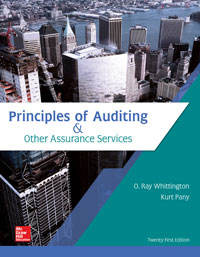
Required: Principles of Auditing and Other Assurance Services 21e by Whittington e-text with McGraw Hill Connect.
Required: Access to a computer internet access and a browser. Calculator. Notebook. Pen/pencil.
|
|
|
|
|
| |
|
|
|
|
|
|
INSTRUCTOR INFORMATION
|
Name of Instructor:
|
Dee Amaradasa
|
|
Campus/Office Location:
|
Online via Canvas (Inbox or WebEx Conference)
|
|
Telephone Number:
|
940-498-6414
|
|
E-mail Address:
|
damaradasa@nctc.edu NOTE – Your instructor will not respond to e-mail sent from your personal or work e-mail addresses. Please use Canvas mail or NCTC Lion Mail to communicate with your instructor.
|
OFFICE HOURS
|
Monday
|
Tuesday
|
Wednesday
|
Thursday
|
Friday
|
Sat.
|
Sunday
|
|
8:00 pm –
10:00 pm Online via Canvas or WebEx – by
appointment
|
8:00 pm –
10:00 pm Online via Canvas or WebEx – by appointment.
|
8:00 pm –
10:00 pm Online via Canvas or WebEx – by appointment.
|
8:00 pm –
10:00 pm Online via Canvas or WebEx – by appointment.
|
|
|
8:00 pm –
10:00 pm Online via Canvas or WebEx – by appointment.
|
|
Note: Although these are my scheduled office hours, you may contact me anytime via Canvas Mail.
|
STUDENT LEARNING OUTCOMES (From Academic Course Guide Manual/Workforce Education Course Manual/NCTC Catalog
|
At the successful completion of this course the student will be able to:
|
|
1.
|
|
Analyze internal control procedures.
|
|
|
2.
|
Describe auditing standards, procedures and the audit reports.
|
|
3.
|
Prepare audit working papers with related schedules.
|
GRADING CRITERIA
|
# of Graded Course Elements
|
Graded Course Elements
|
Percentage or Point Values
|
|
Various
|
Homework Assignments
|
30%
|
|
Various
|
Case Studies/Discussions/ Activities
|
30%
|
|
4
|
Unit Exams
|
40%
|
|
|
|
100%
|
Letter grades for this course will be assigned in accordance with NCTC standard grading policy.
|
A
|
90% - 100%
|
|
D
|
60% - 69%
|
|
B
|
80% - 89%
|
|
F
|
0 – 59%
|
|
C
|
70% - 79%
|
|
|
|
COURSE SUBJECT OUTLINE (Major Assignments, Due Dates, and Grading Criteria)
|
Week
|
Topic
|
Tentative Assignments
|
Due Dates
|
|
1
|
The Role of the Public Accountant in the American Economy
|
Week 1 Extra Credit – Introduce Yourself
Week 1 – Case Studies/Discussion/Activities
Week 1 Homework
|
1/24/2021
|
|
2
|
Professional Standards
|
Week 2 - Case Studies/Discussion/Activities
Week 2 Homework
|
1/31/2021
|
|
3
|
Professional Ethics
|
Week 3 - Case Studies/Discussion/Activities
Week 3 Homework
|
2/7/2021
|
|
4
|
Audit Evidence and Documentation
|
Week 4 - Case Studies/Discussion/Activities
Exam 1
|
2/14/2021
|
|
5
|
Audit Planning, Understanding the Client, Assessing Risks, and Responding
|
Week 5 Case Studies/Discussion/Activities
Week 5 Homework
|
2/21/2021
|
|
6
|
Internal Control.
Consideration of Internal Control in an Information Technology Environment
|
Week 6 Case Studies/Discussion/Activities
Week 6 Homework
|
2/28/2021
|
|
7
|
Audit Sampling
|
Week 7 Case Studies/Discussion/Activities
Week 7 Homework
|
3/7/2021
|
|
8
|
Cash and Financial Investments
|
Week 8 Case Studies/Discussion/Activities
Exam 2
|
3/14/2021
|
|
Spring Break
|
|
9
|
Accounts Receivable, Notes Receivable, and Revenue
|
Week 9 Case Studies/Discussion/Activities
Week 9 Homework
|
3/28/2021
|
|
10
|
Inventories and Cost of Goods Sold
|
Week 10 Case Studies/Discussion/Activities
Week 10 Homework
|
4/5/2021
|
|
11
|
Property, Plant, and Equipment: Depreciation and Depletion
|
Week 11 Case Studies/Discussion/Activities
Week 11 Homework
|
4/11/2021
|
|
12
|
Accounts Payable and Other Liabilities
Debt and Equity Capital
|
Week 12 Case Studies/Discussion/Activities
Exam 3
|
4/18/2021
|
|
13
|
Auditing Operations and Completing the Audit
|
Week 13 Case Studies/Discussion/Activities
Week 13 Homework
|
4/25/2021
|
|
14
|
Auditors’ Reports
|
Week 14 Case Studies/Discussion/Activities
Week 14 Homework
|
5/2/2021
|
|
15
|
Internal, Operational, and Compliance Auditing
|
Week 15 Case Studies/Discussion/Activities
Week 15 Homework
|
5/9/2021
|
|
16
|
|
Exam 4
|
5/13/2021
|
CAPSTONE REQUIREMENTS FOR ACCOUNTING MAJORS
The capstone for the Accounting Technician Certificate is a comprehensive program exam with a score of 70% or higher. Exam must be scheduled with the Department Chair upon completion of a certificate.
The capstone requirement for the AAS Degree in Accounting is ACNT 2302 Accounting Capstone. It should be taken the last semester before graduation. This course may not be substituted.
Regular and punctual attendance is expected of all students in all classes for which they have registered. All absences are considered to be unauthorized unless the student is absent due to illness or emergencies as determined by the instructor. It is the student responsibility to provide documentation as to the emergency for approval and judgement by the faculty member. Approved college sponsored activities are the only absences for which a student should not be held liable and only when provided by a college official ahead of the absence. Valid reasons for absence, however, do not relieve the student of the responsibility for making up required work. Students will not be allowed to make up an examination missed due to absence unless they have reasons acceptable to the instructor. A student who is compelled to be absent when a test is given should petition the instructor, in advance if possible, for permission to postpone the exam. Student will be dropped from a class by the Registrar upon recommendation of the instructor who feels the student has been justifiably absent or tardy a sufficient number of times to preclude meeting the course’s objectives. Persistent, unjustified absences from classes or laboratories will be considered sufficient cause for College officials to drop a student from the rolls of the College. From Board Policy FC (LOCAL)
This class will have online live lectures via Cisco WebEx. The instructor will record the lectures for students who are unable to attend the live lectures.
Attendance in your online course will be measured by the completion of graded assignments by their suggested due dates. Students who fail to log in regularly and participate in online course assignments will be reported to the college as non-attending students.
Non-attendance may impact your Financial Aid.
WITHDRAWING FROM A COURSE
Last day to withdraw from a course with a “W” is April 5th, 2021.
Students can learn more about the withdraw policy and procedure by http://www.nctc.edu/current-students/drop-withdraw-class.html
o Academic General Education Course (from ACGM but not in NCTC Core)
o Academic NCTC Core Curriculum Course
o WECM Course
Students are expected to follow all rules and regulations found in the student handbook and published online.
Scholastic dishonesty shall include, but is not limited to cheating, plagiarism, academic falsification, intellectual property dishonesty, academic dishonesty facilitation and collusion. Faculty members may document and bring charges against a student who is engaged in or is suspected to be engaged in academic dishonesty. See Student Handbook, “Student Rights & Responsibilities: Student Conduct ([FLB(LOCAL)]”.
Please refer to the student handbook on consequences for academic dishonesty.
GRADE APPEALS AND INCOMPLETE GRADES
Students can read more about the college's grade appeal processes and procedures for assigning incomplete grades by visiting the Academic Catalog: https://www.nctc.edu/catalog/academic-policies/grades-reports/student-grade-appeal.html and https://www.nctc.edu/catalog/academic-policies/grades-reports/incomplete-grades.html .
Conversion of Onsite Classes to Online/Remote Format: North Central Texas College students should be aware that in the event of a college closure due to COVID-19, onsite classes will be converted to an online/remote format. Students should plan ahead to ensure they have access to the computer equipment (either PC, MAC, or tablet), webcam, and internet connectivity to continue their classes in an online/remote format. Please read all your official North Central Texas College student emails as the transition from onsite to online/remote might require a reorganization in your personal situation. Students will be granted a 72-hour transition and grace period. Online classes will continue as scheduled without disruption. Wear a mask, stay safe, and contact your Instructor as the situation arises. These policies and procedures were updated on July 30, 2020 and are subject to change as conditions change.
Face Coverings: Per the North Central Texas College guidance on face coverings on campus, in the instructional setting, faculty and students must wear face coverings, such as masks or face shields. Students without coverings, or those who do not comply with the rules relating to face coverings, will not be able to participate in on-campus classroom activities. To request an exception to this requirement, students should contact the NCTC HR Office of Enrollment Management (ccove@nctc.edu). Failure to comply with the face coverings requirement may result in the Instructor directing the student to leave the classroom. Any student asked to leave the classroom may be referred to the student conduct officer. These policies and procedures were updated on July 30, 2020 and are subject to change.
Temporary COVID-19 Attendance Policy for Face-to-Face Meetings: We are facing an unprecedented situation in which all of us must be flexible and make prudent decisions in the best interest of our families, our campus, and our community. In light of this, North Central Texas College is temporarily establishing the requirement that faculty keep records of student attendance for face-to-face course meetings as well as a documented seating chart. In addition, students who are sick or need to quarantine should not attend classes. Students will not be required to provide formal documentation from a health care provider and will not be penalized for COVID-19 related absences when proper notification to campus health officials is made in accordance with the guidelines stated below.
Faculty will:
- Notify students about important course information and delivery changes through Canvas and campus email.
Students should:
- Provide notification to campus officials (via NCTC Daily Health Check protocol through Canvas) if they have tested positive for COVID-19 or have to quarantine so we can confirm reported absence with instructors, monitor, and assist the campus community.
- Notify instructors in advance of the absence.
- Connect with that class through Webex if the class session is being transmitted in a hybrid fashion.
- Keep up with and/or make up missed classwork or assignments.
- Submit assignments digitally through Canvas or other means as announced by your instructor.
- Work with their instructors to reschedule exams, labs, and other critical academic activities described in the course syllabus.
- Check Canvas and campus email daily to receive important announcements pertaining to the course.
During the spring 2021 semester, faculty with face-to-face meetings will establish assigned seating/work stations to facilitate roll-taking, and, if necessary, contact tracing. Additionally, we ask all members of the College community to be attentive to their health, and safeguard others, by following the CDC’s guideline to “stay home when you are sick.” You should stay home if you have symptoms. More information on what to do if you are sick is available at the CDC’s website.
Additional NCTC information is available at http://www.nctc.edu/coronavirus/index.html
QUESTIONS, CONCERNS, or COMPLAINTS
|
Name of Chair/Coordinator:
|
Dr. Cherly Furdge
|
|
Office Location:
|
Corinth Campus, Suite 239 Office 234
|
|
Telephone Number:
|
940-498-6238
|
|
E-mail Address:
|
cfurdge@nctc.edu
|
|
Name of Instructional Dean:
|
Debbie Huffman
|
|
Office Location:
|
Gainesville
|
|
Telephone Number:
|
940-668-3357
|
|
E-mail Address:
|
dhuffman@nctc.edu
|
us Addendum – Spring 2021
NCTC Student Services and Resources
Affinity Groups
Staff and faculty representing the Employee Resource Groups (ERG’s), along with academic advisors, counselors and success coaches, serve as mentors for NCTC’s student-centered Affinity Groups.
An Affinity Group is a population of students who have specific needs, barriers or systems they are needing to navigate not only within college, but within life. Providing mentorship, support and resources for identified Affinity Groups such as Black/African American students, veterans and active military, single parents, students with disabilities, adult learners, Latinx, LGBTQ+ and students who have experienced foster care and/or homelessness, enables us to make more impactful, meaningful connections with students who are in dire need of equity and understanding.
Career Services Center
In need of employment? NCTC Career Coaches meet one-on-one to provide training in writing resumes, job searches, interviewing, and more. The Skills to Succeed Academy is also a free interactive, online employability training program focused on building the skills and confidence you need to find the best career.
Completion Center
The Completion Center provides a variety of services for first-time in college students. These include academic success coaching, goal setting, course planning, student resources, career development, and job placement services for all new college students. Free online Success Seminars are also available through Student Lingo and new students will also enroll in a First Year Experience (NCTC 1001) course to get started on the right track!
Counseling and Advising
Academic Advisors and Counselors help students explore majors and programs offered, how to take the best combination of classes to meet your goals, assist with questions related to university transfer, and guide students towards academic and personal success, and more. At NCTC, you are assigned to a specific advisor or success coach based on your major or career interests. You can locate our advisors and their majors, along with contact information on the Meet Your Advisor page-and even schedule an appointment with them through their online calendar!
Early Alert and CARES
The NCTC Early Alert program assists students who are at risk of failing or withdrawing from a course. Faculty and staff may refer students through the Early Alert process at any point in the semester in an effort to provide appropriate intervention and access to support services. Examples of behaviors that could prompt an Early Alert referral could be missing assignments, failing tests, excessive absences, or personal circumstances impacting academic performance. A student submitted as an Early Alert will be contacted by an academic advisor or success coach through text, phone, and/or via their NCTC e-mail address to discuss any current challenges as well as helpful resources and success strategies-we want our students to finish strong and know that education is a partnership!
The NCTC CARES Team is concerned not only about our students' academic success, but also their emotional and physical well-being. As a student, you have the ability to report concerning behavior which could impact your own safety or the safety of another NCTC student, such as stalking, harassment, physical or emotional abuse, violent or threatening behavior, or self-harm. Visit the NCTC CARES site to also locate campus and community resources, or email counseling@nctc.edu. As always, if you feel there is an immediate threat to your own safety or welfare (or to another student), please call 911 immediately.
Equity, Diversity and Inclusion (EDI)
EDI partners with the entire campus community to create, maintain and demonstrate NCTC’s commitment to an equitable, diverse and inclusive learning environment where NCTC students succeed. NCTC defines equity as encompassing the practice of acknowledging individual differences and systemic disparities when developing new programs and resources for our campus community, which may sometimes challenge our own beliefs and assumptions, in order to ensure balanced educational opportunities toward completion. Everyone Included. Everyone Belongs. Everyone Valued. Everyone Inspired.
Financial Aid
The Office of Financial Aid provides students with information and guidance with applying for eligible types of financial assistance, such as the FAFSA (Free Application for Federal Student Aid). Students who have any types of exemptions or tuition waivers will also work with the Financial Aid Office to have these funds applied to their accounts. Additionally, the Scholarship Office provides local scholarship opportunities through an online application process, and tips on how to secure other types of scholarship awards which can help finance educational goals.
Student Success Center
The Student Success Center is designed to help all students at NCTC develop tools to achieve their academic goals. The center links students to FREE tutoring, including a Writing Center, a Math Lab, and free online tutoring. Student Success offers academic coaching, tutoring, including a Writing Center, and a Math Lab to assist new students acclimate to college by providing computer lab services for prospective students. First generation students can also participate in TRIO which offers specialized services.
Testing Services
The mission of NCTC Testing Services is to provide high-quality testing services that adhere to the professional standards and guidelines to meet the needs of students, faculty, and community members.