|
NORTH CENTRAL TEXAS COLLEGE
COURSE SYLLABUS
|
|
|
Course Title:
|
Problem Solving and Decision Making
|
|
Course Prefix & Number:
|
BMGT 2303
|
Section Number:
|
481
|
Semester/Year:
|
FA2 20
|
|
Semester Credit Hours:
|
3
|
Lecture Hours:
|
48
|
Lab Hours:
|
0
|
|
Course Description (NCTC Catalog):
A study of the financial principles when managing financial affairs. Includes topics such as budgeting, retirement, property ownership, savings and investment planning.
|
|
Course Prerequisite(s): None
|
|
Required Course Materials:
|
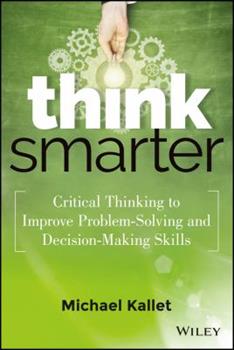
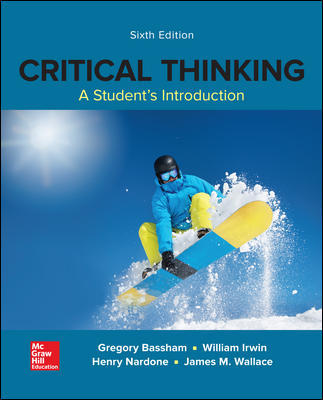 . . 
|
Required Texts:
Critical Thinking: A Students Introduction 6th Edition
Authors: Bassham, Irwin, Nardone & Wallace
ISBN: 978-0-07-803839-6
Think Smarter
Author: Michael Kallet
ISBN: 978-1-118-72983-0
|
|
| |
|
|
|
|
|
|
INSTRUCTOR INFORMATION
|
Name of Instructor:
|
Teresa Laman
|
|
Campus/Office Location:
|
COR313
|
|
Telephone Number:
|
940-498-6263 office; 940-600-1560 Google Voice
|
|
E-mail Address:
|
tlaman@nctc.edu (preferred)
|
OFFICE HOURS
|
Monday
|
Tuesday
|
Wednesday
|
Thursday
|
Friday
|
|
|
6 am – 7 am
|
6 am – 7 am
|
6 am – 7 am
|
|
|
|
7 pm – 8 pm
|
7 pm – 8 pm
|
7 pm – 8 pm
|
|
|
By Appointment
|
STUDENT LEARNING OUTCOMES (From Academic Course Guide Manual/Workforce Education Course Manual/NCTC Catalog
|
At the successful completion of this course the student will be able to:
|
|
Identify individual, group, and organizational decision-making processes
|
|
Write, present, and defend project recommendations
|
|
Apply process to solving problems using managerial decision tools and critical thinking
|
GRADING CRITERIA
|
# of Graded Course Elements
|
Graded Course Elements
|
Percentage or Point Values
|
|
6
|
Critical Thinking Quizzes
|
25%
|
|
6
|
SmartBook Exercises
|
10%
|
|
6
|
Creative Problem-Solving Exercises
|
15%
|
|
7
|
Discussion Forums
|
25%
|
|
1
|
Final Project & Presentation
|
25%
|
COURSE SUBJECT OUTLINE (Major Assignments, Due Dates, and Grading Criteria)
|
Topic
|
General Description of Subject Matter
|
|
Intro to Critical Thinking
|
What is Critical Thinking & Why is it Important
|
|
Chapter 2 & 3
|
Recognizing Arguments
Basic Logical Concepts
|
|
Chapter 5 & 6
|
Logical Fallacies 1 & 2
|
|
Chapter 14
|
Thinking Critically about the Media
|
|
Think Smarter: Section 1-2
|
Applying Critical Thinking to Business situations
|
|
Think Smarter: Section 3 & 4
|
Using Critical thinking to solve problems & make decisions
|
|
Decision Making Tools
Think Smarter: Section 5
|
Explore common management tools used to evaluate problems and generate solutions. Persuasion and solution buy-in
|
|
Putting it all together
|
Application of problem-solving tools Project & Presentation
|
Regular and punctual attendance is expected of all students in all classes for which they have registered. All absences are considered to be unauthorized unless the student is absent due to illness or emergencies as determined by the instructor. It is the student responsibility to provide documentation as to the emergency for approval and judgement by the faculty member. Approved college sponsored activities are the only absences for which a student should not be held liable and only when provided by a college official ahead of the absence. Valid reasons for absence, however, do not relieve the student of the responsibility for making up required work. Students will not be allowed to make up an examination missed due to absence unless they have reasons acceptable to the instructor. A student who is compelled to be absent when a test is given should petition the instructor, in advance if possible, for permission to postpone the exam. Student will be dropped from a class by the Registrar upon recommendation of the instructor who feels the student has been justifiably absent or tardy a sufficient number of times to preclude meeting the course’s objectives. Persistent, unjustified absences from classes or laboratories will be considered sufficient cause for College officials to drop a student from the rolls of the College. From Board Policy FC (LOCAL)
Last day to withdraw from a course with a “W” is ____October 30, 2020 ________.
DISABILITY SERVICES (Office for Students with Disabilities)
The Office for Students with Disabilities (OSD) provides support services for students with disabilities, students enrolled in technical areas of study, and students who are classified as special populations (i.e. single parents).
Support services for students with disabilities might include appropriate and reasonable accommodations, or they may be in the form of personal counseling, academic counseling, career counseling, etc. Furthermore, OSD Counselors work with students to encourage self-advocacy and promote empowerment. The Counselors also provides resource information, disability-related information, and adaptive technology for students who qualify.
If you feel you have needs for services that the institution provides, please reach out to either Wayne Smith (940) 498-6207 or Yvonne Sandman (940) 668-4321. Alternative students may stop by Room 170 in Corinth or Room 110 in Gainesville.
CORE CURRICULUM FOUNDATIONAL COMPONENT AREA (For classes in the Core)________
o Communication
o Mathematics
o Life and Physical Science
o Language, Philosophy & Culture
o Creative Arts
o American History
o Government/Political Science
o Social and Behavioral Sciences
o Component Area Option
REQUIRED CORE OBJECTIVES (For classes in the Core)
o Critical Thinking
o Communication
o Empirical and Quantitative
o Teamwork
o Personal Responsibility
o Social Responsibility
o Academic General Education Course (from ACGM but not in NCTC Core)
o Academic NCTC Core Curriculum Course
x WECM Course
Students are expected to follow all rules and regulations found in the student handbook and published online.
Scholastic dishonesty shall include, but is not limited to cheating, plagiarism, academic falsification, intellectual property dishonesty, academic dishonesty facilitation and collusion. Faculty members may document and bring charges against a student who is engaged in or is suspected to be engaged in academic dishonesty. See Student Handbook, “Student Rights & Responsibilities: Student Conduct ([FLB(LOCAL)]”.
QUESTIONS, CONCERNS, or COMPLAINTS
|
Name of Chair/Coordinator:
|
Cherly Furdge, Ph.D
|
|
Office Location:
|
COR Rm 234
|
|
Telephone Number:
|
940-498-6238
|
|
E-mail Address:
|
cfurdge@nctc.edu
|
|
Name of Instructional Dean:
|
Debbie Huffman
|
|
Office Location:
|
Gainesville
|
|
Telephone Number:
|
940-668-7731
|
|
E-mail Address:
|
dhuffman@nctc.edu
|